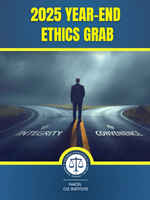
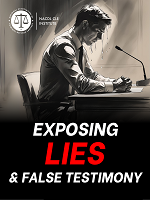
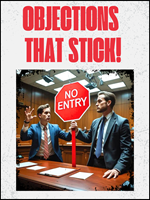
Compassionate Release Motions and Decisions by Jurisdiction Filter Results Active Content Filter X Cases & Briefs Filter by Project 4th Amendment Center (4) Cannabis Justice Initiative (8) Case Tracker (59) Excessive Sentencing Project (2) Federal Compassionate Release Clearinghouse (2) Policing and Overcriminalization of Pregnancy (4) Return to Freedom Project (2) Filter by Topic Amicus Briefs (335) Amicus keywords (290) Compassionate Release (102) Coronavirus (51) COVID-19 (51) Excessive Sentencing (58) Fifth Amendment (53) Forensic Science (63) Fourth Amendment (106) Legal Documents Library (84) Overcriminalization (72) Public Health (51) Sentencing (245) Sixth Amendment (155) White Collar (162) Filter by Jurisdiction Federal Court (529) U.S. States and Territories (212) United States Supreme Court (462) 2nd Circuit Court of Appeals (64) 3rd Circuit Court of Appeals (39) 4th Circuit Court of Appeals (79) 5th Circuit Court of Appeals (33) 6th Circuit Court of Appeals (42) 7th Circuit Court of Appeals (31) 9th Circuit Court of Appeals (105) 10th Circuit Court of Appeals (40) 11th Circuit Court of Appeals (28) District of Columbia Circuit Court of Appeals (34) New York (31) D.D.C. (21) Filter by US Code 18 U.S.C. 111 (32) 18 U.S.C. 871 (2) 18 U.S.C. 875 (2) 18 U.S.C. 46307 (1) 18 U.S.C. 1865(a) (1) 18 U.S.C. 922 (3) 18 U.S.C. 371 (2) 18 U.S.C. 119 (1) 21 U.S.C. 841(a)(1) (1) 18 U.S.C. 1001(a)(2) (1) 18 U.S.C. 1505 (2) 8 U.S.C. 1325(a)(1) (4) 18 U.S.C. 922(g)(1) (1) 18 U.S.C. 641 (1) 40 U.S.C. 1315 (1) 18 U.S.C. 1382 (3) 50 U.S.C. 797 (3) 18 U.S.C. 1361 (1) 18 U.S.C. 1071 (1) 8 U.S.C. 1324 (1) 18 U.S.C. 2 (1) 18 U.S.C. 373 (1) 18 U.S.C. 1344 (1) 18 U.S.C. 1014 (1) 18 U.S.C. 1958 (1) 18 U.S.C. 924 (1) 18 U.S.C. 2119 (1) 18 U.S.C. 2113 (1) Filter by Case Outcome Acquittal - Bench (2) Acquittal - Jury (11) Dismissal - without Prejudice (15) Dismissal with Prejudice (16) Guilty - Jury (1) Guilty Plea (1) No Bill - further action (1) No Bill - no further action (1) Recharged at Lower Level (1) Filter by AUSA Alexander, Keith (1) Andrews, Shawn, T. (1) Anthony, Stephen E. (1) Arakawa, Jordan (1) Barclay, Michael, L. (1) Border, Lauren, E. (1) Bove, Jessica (1) Bradford, Scott (1) Brandley, George (1) Carney, Caelainn (1) Castaneda, Patrick (1) Chang, Stephen (1) Chapman, Timothy, J. (1) Countryman, Phillip D. (1) Ellis, Michael, J.A. (1) Eppel, Solomon (1) Essayli, Bilal, A. (1) Galvan, Brenda, N. (1) Gardner, Grant (1) Green, Jacob, M. (1) Halligan, Lindsey (2) Havey, Brian, R. (1) Henek , David T. (1) Hennessy, Sean (1) Hitt, Jason (1) Hogan, William, Jr., R. (1) Howland, Christopher, R. (1) Keller, Roger (1) Kibbe, Patrick, D. (1) Lee, Sonah (1) Levy, Mark (1) Lewis, Frances, S. (1) Macey, Christine, M. (1) McCarren, Mark, J. (1) McQuire, Robert (1) Miller, Brian (1) Mulroe, Conor (1) Naseef, Kate, M. (1) Payano, Iricel, E. (1) Pelt, Erin, V. (1) Perez De La Rosa , Jr., Alfredo (1) Pirro, Jeanine, F. (1) Ranney, Sarah, C. (1) Sabir, Sehar, F. (1) Satter, Joshua (1) Shah, Milind, M. (1) Sleeper, Adam, F. (1) Smith, Kenneth, M. (1) Snell, Jeffrey, S. (2) Srinivasan, Girish, K. (1) Strong, Thomas, G. (1) Thakor, Neil (1) Thompson, Alison (1) Tonkin, Elizabeth (1) Wannarka, Sarah (1) Webman, Aaron L. (1) Williams, Courtney, N. (1) Wolf, Travis (1) Showing 1 - 15 of 1255 results Newest Oldest Relevance Cases & Briefs United States v. Sean Combs Amicus Brief for the National Association of Criminal Defense Lawyers in Support of Defendant-Appellant Sean Combs Cases & Briefs United States v. Bost Brief of Court-Appointed Amicus Curiae National Association of Criminal Defense Lawyers Cases & Briefs Hartmann et al. v. Chudzik et al. Amicus Brief on behalf of the National Association of Criminal Defense Lawyers in Support of Plaintiffs-Appellants to Reverse the District Court’s Partial Dismissal Order. Cases & Briefs Hunter v. United States Brief of the National Association of Criminal Defense Lawyers as Amicus Curiae in Support of Petitioner. Cases & Briefs United States v. Tyler Scott Johnston Brief of Amici Curiae The Legal Aid Society, National Association of Criminal Defense Lawyers, New York State Association of Criminal Defense Lawyers In Support of Defendant-Appellee Cases & Briefs Breimeister v. United States Brief of the National Association of Criminal Defense Lawyers and The Cato Institute as Amici Curiae in Support of Petitioner. Cases & Briefs United States v. Jefferson Defendant was indicted in EDVA for bank robbery and carjacking on 12/2/2025, with the Indictment indicating that Lindsay Halligan was the U.S. Attorney. Because Judge Currie had previously ruled that Ms. Halligan was not properly serving as the U.S. Attorney for EDVA, the Judge in this case demanded she explain the basis for her continuing to purport to act in that capacity. After hearing from Ms. Halligan, the Judge barred her from representing herself as the U.S. Attorney for EDVA. Ms. Halligan subsequently left the office of U.S. Attorney for EDVA. Cases & Briefs United States v. Harris Defendant alleged to have assaulted two Department of Homeland Security officers by spitting on them and was indicted for felony assault. Cases & Briefs United States v. Jackson Brief for Amici Curiae Nevada Attorneys for Criminal Justice and National Association of Criminal Defense Lawyers in Support of Appellees and Affirmance Cases & Briefs United States v. Stanley and Morrow Protestors allegedly obstructed the entrance to an ICE facility parking lot in Charlotte, North Carolina. Cases & Briefs State of Ohio v. Danielle Barton Brief of Amici Curiae Idaho Association of Criminal Defense Lawyers (IACDL) and National Association of Criminal Defense Lawyers (NACDL) In Support of Appellant Cases & Briefs United States v. Maltos Defendant was stopped for following ICE vehicles in Charlotte. When confronted by five ICE agents, the defendant allegedly moved forward and struck an ICE agent with his driver's side rearview mirror. Cases & Briefs United States v. Williams This felon in possession of gun case was initially no billed by a grand jury, but was indicted after the US Attorney's Office sought a second indictment. Cases & Briefs United States v. Julian Raymon Ortiz Granting dismissal without prejudice of indictment and release of defendant detained for distribution of methamphetamine, due to Sixth Amendment violation by failure to pay appointed counsel for five months; temporary restoration of CJA funding through January 2026 is inadequate to remedy past prejudice and assure future compensation; distinguishing contrary rulings in the same district. See also US v. Castro, ED Cal. 2:24-cr-74; US v. Evanovich, ED Cal. 2:24-cr-79; US v. Vasquez, 2:25-cr-135. Cases & Briefs United States v. Jimenez The defendant Jimenez pulled his vehicle next to ICE agents who were questioning people in a car and the ICE agent shot him as he drove away. This is a sponsored adMyCaseManage Your Law Firm All in One Place Featured Products 2025 Year-End Ethics Grab Earn your ethics credits for 2025 by learning from some of the best criminal defense attorneys in the country! This comprehensive year-end ethics program brings together three of NACDL’s most practical and timely presentations—helping defense lawyers meet their ethics credit requirements while sharpening their understanding of the professional challenges facing today’s practice. This special compilation includes the highest-rated legal ethics presentations delivered at NACDL conferences in 2025! Using AI for Trial Preparation: Managing Overwhelming Caseloads This 1-hour program shows defense lawyers how to use AI to tame heavy caseloads while staying ethical. Learn to auto-summarize discovery into timelines, relationship maps, and contradiction charts; draft and refine cross-exams; analyze juror questionnaires; and test case theories. Set up workflows and agents to monitor law, media, and social posts. Build simple custom trial tools. Leverage sentencing data for mitigation. Includes confidentiality, verification, and disclosure best practices to boost accuracy and save hours weekly. Pozner's Red Book on Cross: Lessons in Advanced Cross-Examination This compact handbook brings together over 20 of Larry Pozner’s most powerful cross-examination articles, covering core principles and advanced strategies for witness control, impeachment, chaptering, and framing reasonable doubt. Packed with scripting examples, real-world scenarios, and tactical insight, it shows how to press or pivot with purpose, drop weak points, and keep cross disciplined. Whether dismantling an officer’s account, challenging an eyewitness, or exposing investigative gaps, Pozner’s field manual delivers courtroom-ready tools to win. Exposing Lies and False Testimony in Criminal Trials When a case hinges on credibility, the lawyer who can expose a lie controls the outcome. This program delivers a courtroom-ready system to detect deception, dismantle false testimony, and turn credibility attacks into acquittals or favorable pleas. Learn research-backed methods to spot dishonesty in interviews, build an impeachment toolkit under the rules of evidence, and craft narratives that reveal bias, motive, and contradictions—arming you to challenge police, experts, informants, and eyewitnesses with precision. Objections That Stick! How to Exclude, Preserve, and Persuade If you’re not objecting, you might be conceding—learn how to stop giving ground. This program delivers practical strategies for making effective objections in criminal trials, especially drug cases. Learn how to challenge hearsay, 404(b) evidence, improper opinions, and prejudicial testimony. You’ll get objection language, methods for preserving error, and tactics for handling misconduct in closing arguments. With real-world examples and trial-tested tools, this program helps defense attorneys sharpen courtroom advocacy and protect the record for appeal. Combating the "Rape Myth" Expert: Excluding & Diffusing Expert Testimony When the prosecution uses a “rape myth” expert to sway the jury, do you know how to stop them—and turn their science against them? This program, based on a real trial, gives defense attorneys a practical roadmap to challenge and exclude biased psychological testimony. You’ll get sample voir dire, motion language, Daubert strategies, and tips for exposing flawed methodology and narrowing testimony. Whether you're aiming to exclude the expert or limit their impact, this session equips you with the tools to protect your client and assert control in the courtroom. Pattern Cross-Examination for Digital Forensic Experts This guide provides ready-to-use cross-examination questions, categorized by artifact type and case theme—from cell phone towers to deleted texts to smart devices and cloud forensics. Whether you’re handling a case involving child exploitation, stalking, or online fraud, this book delivers practical patterns designed to highlight sloppy forensics, bias, tool limitations, and assumptions of intent or identity. Defense attorneys don’t need a computer science degree—they need strategy, control, and the right questions to challenge the illusion of digital certainty in court. Using Chat GPT in Criminal Cases - Writing Better Prompts Want a motion written in plain language but grounded in Tennessee case law? Need a summary of Fourth Amendment jurisprudence with primary and secondary citations? This is where you learn how to get that—on demand, and with far less editing. This training is designed specifically for attorneys—busy professionals who need fast, accurate, and case-relevant AI support. Whether you’re drafting motions, brainstorming legal strategy, summarizing complex case law, or preparing cross-examinations, the quality of your AI output comes down to one thing: how you ask for it. Alcohol, Blackouts and Consent in Sex Cases This comprehensive training program provides defense attorneys with a rigorous, science-backed approach to dismantling prosecutorial narratives, exposing unreliable testimony, and ensuring that juries are properly educated on the complexities of memory, intoxication, and consent. You'll explores critical mistakes and misconceptions encountered in these cases, including errors in memory reconstruction after an event, incorrect inferences, cognitive schemas, suggestibility, contamination and misinformation, mistakes of fact and more. Overcoming the Presumption of Guilt and Defining Reasonable Doubt Reasonable Doubt, what is it? In order to win criminal cases, the defense practitioner must object to a reasonable doubt standard that lowers the burden of guilt. This program will discuss proven methods to argue and define reasonable doubt persuasively to a jury. You’ll learn how define reasonable doubt using metaphors and hypothetical scenarios that force juries to dispute the evidence, conflicts in the evidence, or even lack of evidence in your case. The DIY of DNA: Exoneration Through DNA Evidence This presentation might be the first time you’re truly able to truly grasp the fundamentals of DNA evidence. This critical presentation blends real-world storytelling with clear, practical instruction—making DNA evidence finally feel accessible, even to non-scientists—while inspiring attorneys to dig deeper, ask smarter questions, and approach forensic science with newfound confidence. You’ll learn how to identify and interpret electropherograms, understand autosomal vs. Y-STR testing, and recognize the limits of DNA evidence—particularly when it involves partial or mixed samples. Upcoming Events Featured Events 18 Feb 2026 2026 Midwinter Meeting & Seminar 19 Feb 2026 2026 Midwinter Seminar - LIVESTREAM 25 Feb 2026 Influencing the Algorithm: Brand Strategies for the AI Age 23 Apr 2026 2026 Forensic Science & Technology Seminar